Overview
The graph autoencoder (GAE) extends reconstruction-based anomaly detection by explicitly modeling neighborhood relationships among nearby InSAR points. Nodes represent observation points, and edges are built from geographic nearest neighbors.
Graph Construction
- Nodes: individual time series.
- Edges: $k$-nearest neighbors in latitude/longitude, with distance-based weights.
- Features: normalized time-series embeddings and optional static metadata.
Main Idea
Seed nodes and their sampled neighborhoods are passed through a graph encoder-decoder. The model reconstructs each seed-node feature from local context. Nodes with large reconstruction errors are flagged as anomalies.
GAE Workflow
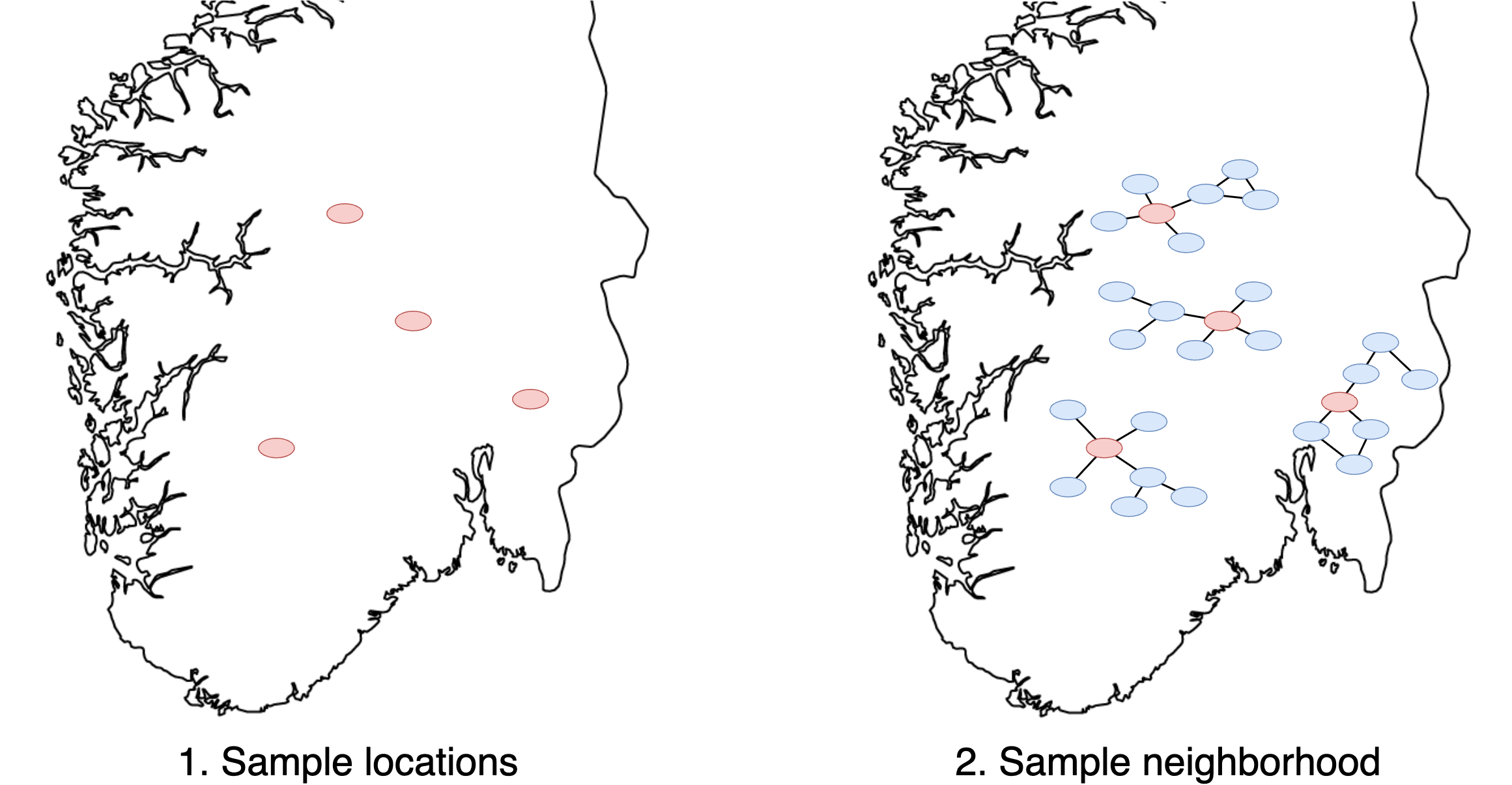
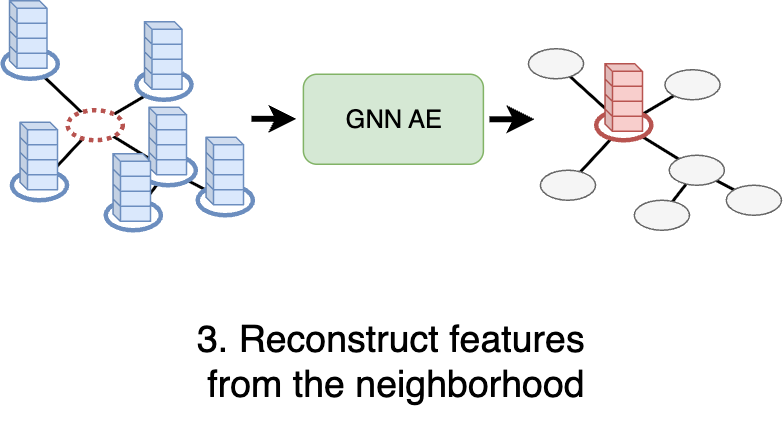
This setup is effective for identifying locally inconsistent behavior, including noisy samples caused by processing artifacts.
An example batch graph used during training is shown below.
Model Architecture
The GAE model contains a GCN-based encoder and an MLP decoder.
architecture:
  name: Graph-AE
  type: AutoEncoder
  hparams:
    encoder_dims: [32, 32, 16, 16]
    latent_channels: 8
    decoder_dims: [8, 16]
    activation: "ReLU"
    batch_norm: True
    dropout: 0.1
Results
Lyngen


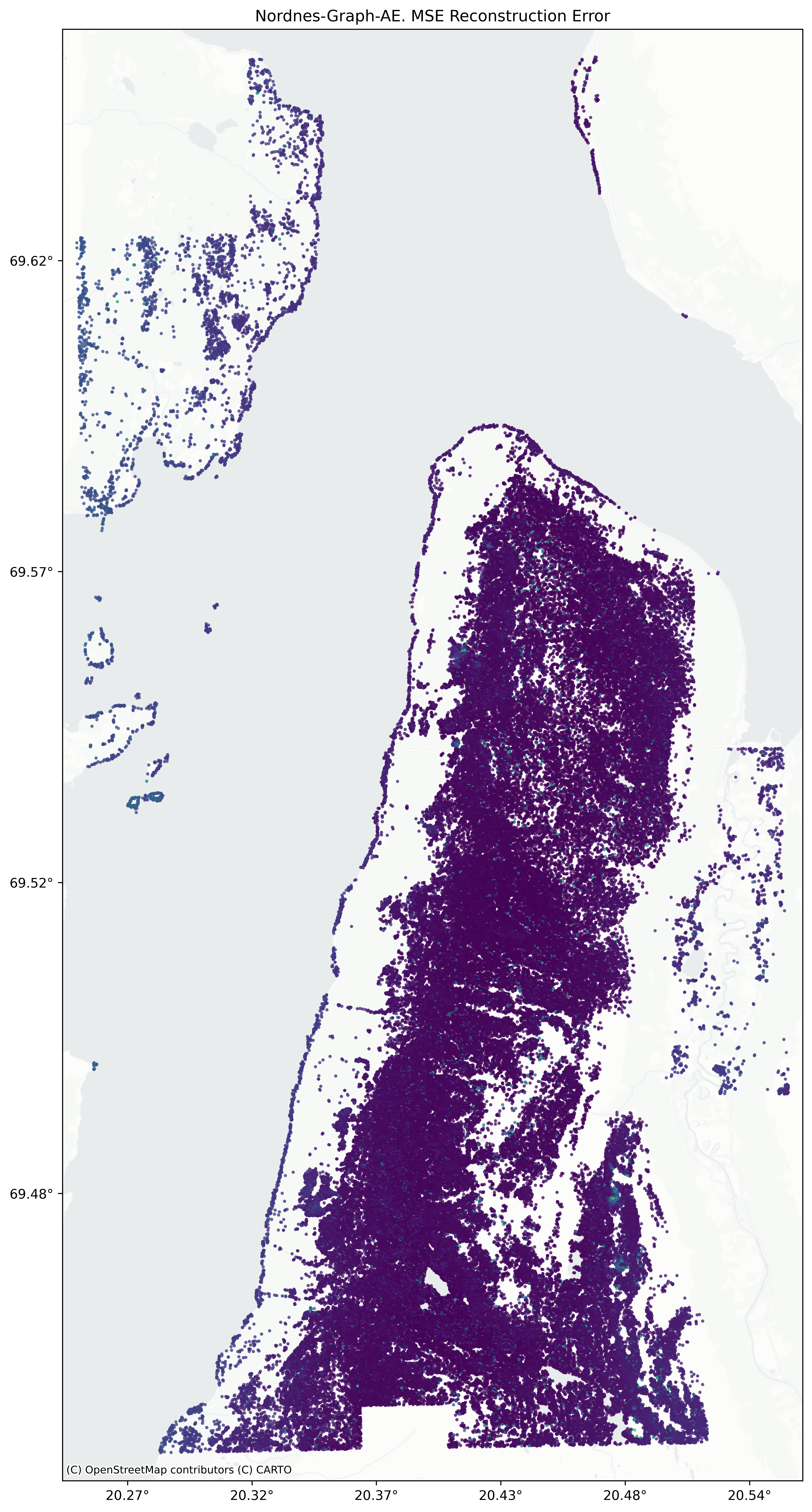
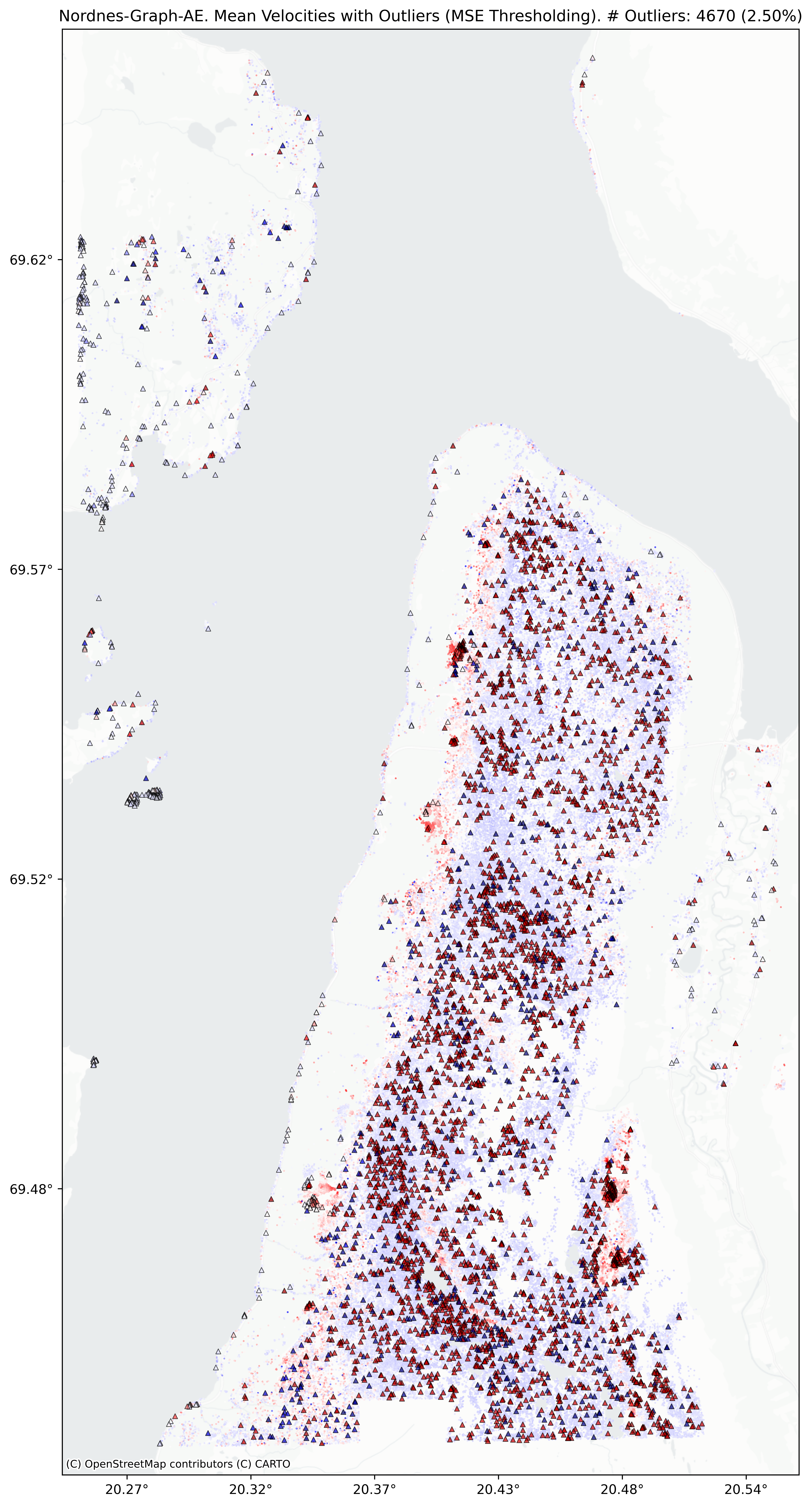
Nordnes
Svalbard